
The Master Clock: An Orientation to Pinealon and Epitalon
This post provides an orientation on two of the most discussed bioregulator peptides: Pinealon and Epitalon (also known as Epithalon). While most recovery-focused peptides target tendons, these two are studied for their potential impact on the body’s internal clock and cellular aging.
As we age, our bodies lose their rhythmic precision. We find it harder to fall asleep, notice a decline in cognitive sharpness, or feel that our overall vitality is dimming. A specific class of peptides known as bioregulators is being studied for its ability to help reset these internal systems.
Two prominent names in this category are Pinealon and Epitalon. Unlike the peptides used for physical injury, these are focused on the pineal gland—a tiny, pinecone-shaped organ in the brain that acts as the master regulator of our circadian rhythms and hormonal balance.
Important Disclaimer: This article is for educational and informational purposes only. It does not constitute medical advice, diagnosis, or treatment. Peptides are powerful biological compounds; their legal status and safety profiles are subject to change and vary by jurisdiction. Always consult with a licensed healthcare professional before considering any new therapeutic intervention.
What is Pinealon?
Pinealon is a short, three-amino acid peptide (a tri-peptide). It is specifically categorized as a neuro-protective bioregulator.
Research suggests that Pinealon targets the cells of the brain and the central nervous system. Its primary role in studies is the protection of neurons from oxidative stress. When the brain is under stress—whether from lack of sleep, aging, or environmental factors—the "signaling efficiency" between neurons can degrade. Pinealon is studied for its potential to support memory, attention, and cognitive health by protecting these vital neural pathways.
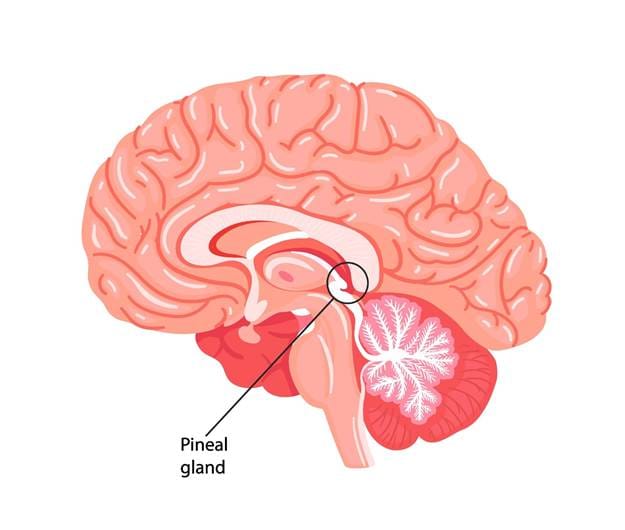
Getty Images
What is Epitalon?
Epitalon is a four-amino acid peptide (a tetra-peptide) that has gained significant attention in longevity research. It was originally developed at the St. Petersburg Institute of Bioregulation and Gerontology.
The primary focus of Epitalon research is telomerase activation. Telomeres are the protective caps at the ends of our chromosomes. Each time a cell divides, these caps get a little shorter. When they get too short, the cell can no longer function properly. Epitalon is being studied for its potential to stimulate the production of telomerase, an enzyme that can help maintain the length of these protective caps, potentially slowing the cellular aging process.
Additionally, Epitalon is known to influence the pineal gland’s production of melatonin. This isn't just about sleep; melatonin is one of the body’s most potent antioxidants.
Why are they sometimes used together?
In the bioregulator community, Pinealon and Epitalon are often viewed as a "synergistic pair." While they both interact with the systems governed by the pineal gland, they do so through different doors:
- Epitalon acts on the "structural" and "hormonal" side, focusing on telomere length and systemic melatonin regulation.
- Pinealon acts on the "functional" and "cognitive" side, focusing on protecting brain cells and improving mental clarity.
By pairing them, researchers aim to address both the internal "rhythm" of the body (sleep/wake cycles and hormonal health) and the "performance" of the brain (memory and focus).
The Reality Check
It is important to note that while the data from the St. Petersburg Institute is extensive, many of these studies are specific to the "bioregulator" framework developed in Eastern Europe. Large-scale clinical trials are still limited. Furthermore, these peptides are not a replacement for fundamental health habits. The best bioregulator remains a consistent sleep schedule, a nutrient-dense diet, and regular movement.
When verifying the quality of bioregulator peptides, the molecular weight provides the definitive identity of the substance. If a lab report for Pinealon shows an observed mass significantly different from the expected fingerprint, the material is likely something else.
Below is the reference table for these two specific bioregulators.
Bioregulator Fingerprint Reference Table (2026)
|
Peptide Name |
Primary Focus |
Molecular Weight
(Approx. Da) |
Sequence Length |
|
Pinealon |
Neuroprotection and
Circadian Health |
418.4 |
3 Amino Acids |
|
Epitalon |
Telomere Length and
Melatonin |
390.3 |
4 Amino Acids |
Verifying the COA
Because these peptides are very short, consisting of only three or four amino acids, their molecular weights are relatively low compared to repair peptides like BPC-157. When reviewing the Mass Spectrometry (MS) section of your report, ensure the peak corresponds to these specific values.
In the 2026 landscape, most high-quality vendors will also provide the sequence confirmation alongside the purity data. For Pinealon, the sequence should be listed as Glu, Asp, Arg. For Epitalon, it should be listed as Ala, Glu, Asp, Gly.
Citations & Further Reading
For those who wish to dive deeper into the clinical mechanisms of bioregulators, the following resources provide the scientific foundation for Pinealon and Epitalon:
1. On Telomerase and Cellular Aging
- The Mechanism: Epitalon is studied for its ability to induce telomerase activity, which supports the structural integrity of chromosomal caps during cell division.
- Key Study: Khavinson, V. K., et al. (2003). "Peptide Promotes Telomerase Activity and Telomere Elongation in Human Somatic Cells." Bulletin of Experimental Biology and Medicine.
- Core Finding: This study demonstrates the potential for Epitalon to extend the Hayflick limit (the number of times a cell can divide) in human cell cultures.
2. On Neuroprotection and Oxidative Stress
- The Mechanism: Pinealon is studied for its ability to reduce free radical damage in brain tissues and improve the signaling efficiency of neurons.
- Key Study: Khavinson, V. K., et al. (2014). "Neuroprotective Effects of Tripeptides." Pharmaceutical Chemistry Journal.
- Core Finding: Provides a technical overview of how short-chain peptides like Pinealon cross the blood-brain barrier to interact with neural receptors.
3. On Circadian Rhythms and the Pineal Gland
- The Mechanism: The pineal gland acts as the master clock, and its decline is a hallmark of biological aging.
- Key Study: Pierpaoli, W., & Regelson, W. (1994). "The Pineal Control of Aging." Proceedings of the National Academy of Sciences.
- Core Finding: While not specific to a single peptide, this foundational research outlines why the pineal gland is the primary target for age-intervention strategies.